|
|
Our Experience
Sunhara India
India
Project Description
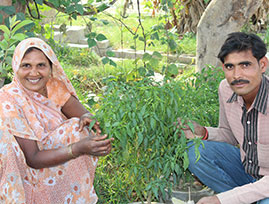
The Sunhara (“Prosperous�?) India program applied a market facilitation approach to encourage pro-poor, inclusive economic growth in horticultural value chains. The project used leverage points to improve agricultural systems in India as a whole and build on the existing market incentives and knowledge of Indian farmers. The program targeted women with an integrated methodology that recognized the importance of addressing both social and economic constraints to market participation and empowerment.
With funding from the Bill & Melinda Gates Foundation, Agribusiness Systems International (ASI) implemented the Sunhara program from 2009–2013 in seven districts of Uttar Pradesh in partnership with several Indian NGOs and private sector partners. Sunhara worked with over 25,000 smallholder farmers—30 percent of whom were women. This is a significant percentage given the cultural restrictions traditionally placed on women in Uttar Pradesh that limit their ability to leave their households and participate in agricultural training. The program built on the experience and lessons of previous and ongoing projects in India implemented by ASI’s affiliate, ACDI/VOCA.
Project Approach
The project has three interlinked components:
1. Farmer outreach:Sunhara improved farm production efficiency by providing extension information and new technologies accessible through public and private sector channels. This outreach included training of input retailers by input suppliers, modernizing extension delivery, and using information communication technology (ICT) for service delivery.
2. Market access and value chain system development: Sunhara facilitated the establishment of direct market linkages among farmers, buyers, and input suppliers—including exporters, retail chains, farmer federations, and local retailers—in order to promote diverse options through alternative marketing arrangements. It also enhanced farmers’ knowledge of traditional marketing infrastructures and institutions.
3. Women’s empowerment: Sunhara integrated women into market-driven enterprise activities to increase their incomes and enhance their socioeconomic empowerment. It also addressed gender-based challenges, including low literacy, limited self-confidence, intra-household norms, and control over resources.
Impact and Accomplishments
Key results of the program include:
- Income: Increased on average 87 percent for surveyed beneficiaries. Women and men experienced similar levels of increase (82 percent and 88 percent, respectively).
- Outreach: Worked with over 25,000 farmers, 6,335 of whom were women.
- Rural Input Distribution Centers: Established 11 farmer resource centers (for farm inputs and extension) and 37 franchises (for input and output marketing). They operated independent of project support and collectively reached 10,500 farmers.
- Adoption of improved agronomic practices: 70 percent of farmers adopted at least two technologies or agriculture management practices.
- Training/group formation: Strengthened or established hundreds of groups—277 of which are women-only—including two women-controlled federations and one producer company. The project identified and built the capacity of 1,023 lead farmers who are each responsible for a group of 20–25 outgrower farmers.
- Market access: 85 percent of farmers reported improved market access, with 61 percent of the farmers selling through alternative distribution channels.
- Literacy: Formed 20 literacy centers and one women’s resource center.
- Access to savings and credit: Supported 112 women-managed, self-help groups that opened bank accounts; 63 percent of women reported greater access to finance.
- Social/economic awareness: 71 percent of women reported awareness of social entitlements—up from only 38.7 percent reporting awareness at project start.
» See also information about the Sunhara Walmart program.
» Back to main Our Experience page.
|

